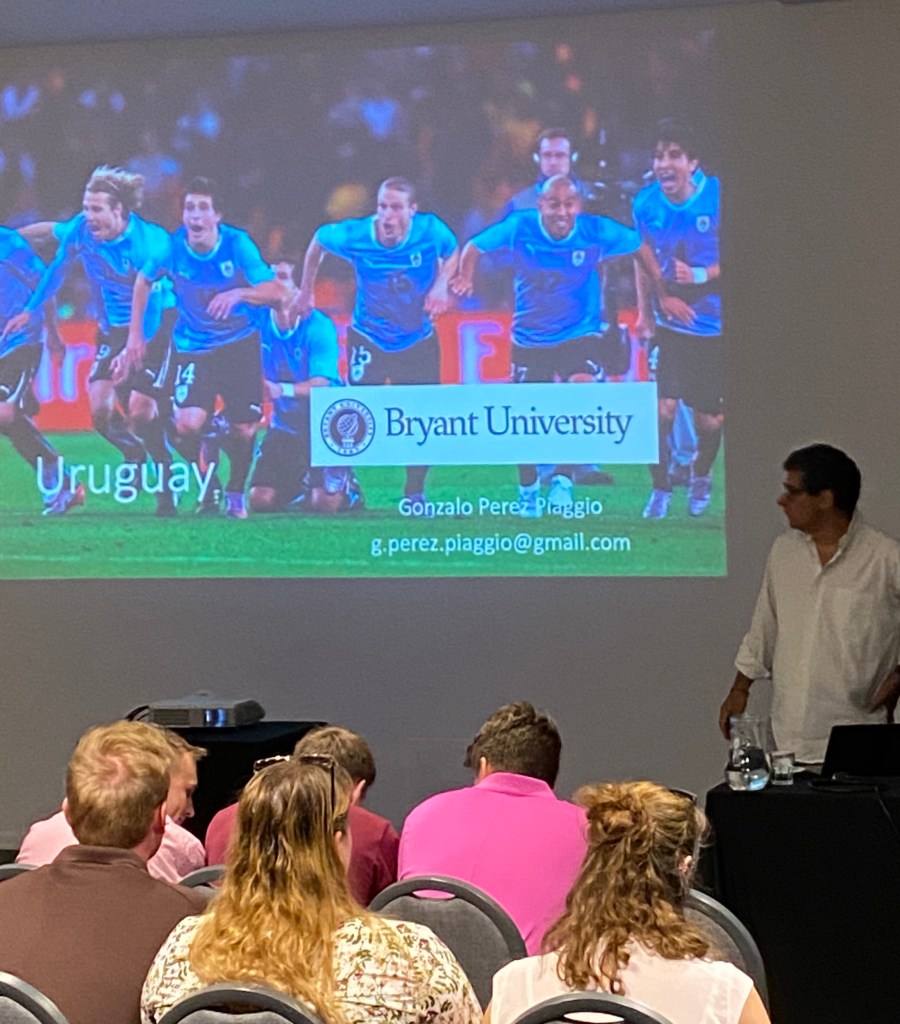
Odd you say? This is how Gonzalo Perez Piaggio, an economist and a professor at Deakin University, referred to the political and economic status of Uruguay while speaking with us at the Esplendor Montevideo Hotel.
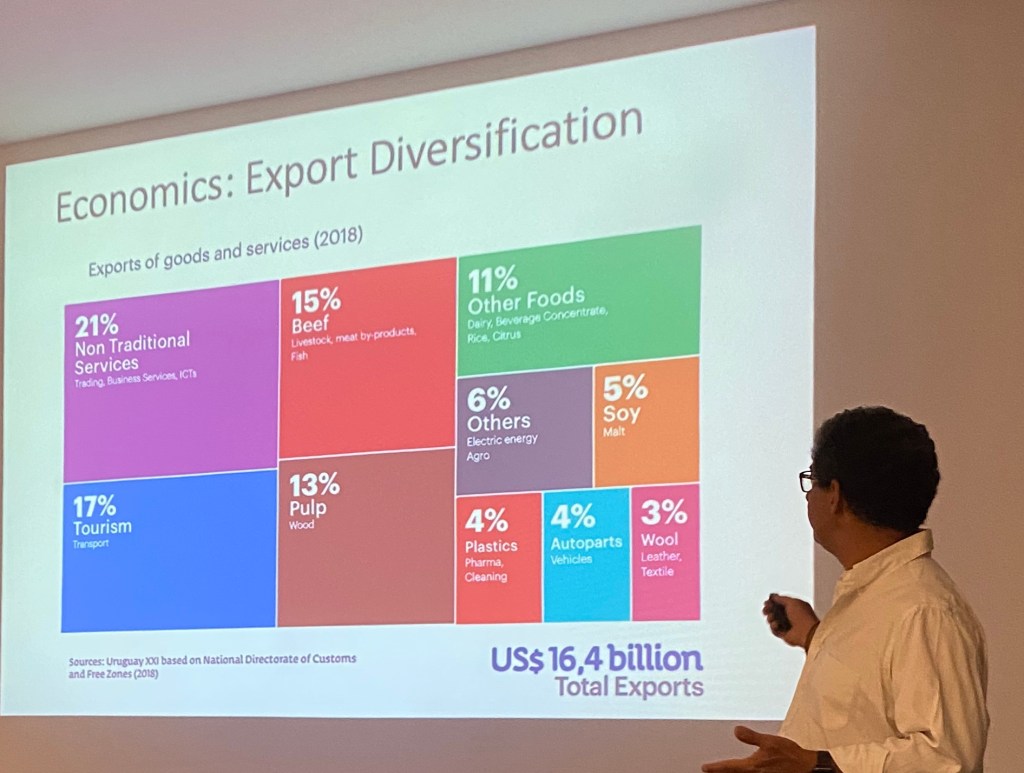
To begin with, Gonzalo discussed the history of Uruguay . Uruguay gained independence in 1825 and was founded on the principle of promoting civil and religious liberties. As time continued, Uruguay had a few indigenous groups and a low indigenous population. This is because of they heavy influences from Italy and Spain with 94% of there population being of that ancestry. All the way up into the 1950s Uruguay was one of the wealthiest countries in the world till Australia and New Zealand become direct competitors with them when coming to trade. This impacted Uruguay’s three biggest exports: beef, other foods, and wool. Moving on, Gonzalo stated Uruguay’s mix of traditional, secular, and survival values are what brings it great political and social stability. These values are a driving force in democracy. Today this is why Uruguay is one of the two full democracies in Latin America. Additionally, because of these values, Uruguay touts the highest transparency between its people and government at any country in Latin America and freedom of information is also scored very well for a Latin American country. Thus, proving Gonzalo’s point that a country with only 3.5 million people might be a little bit different than the rest of Latin America.
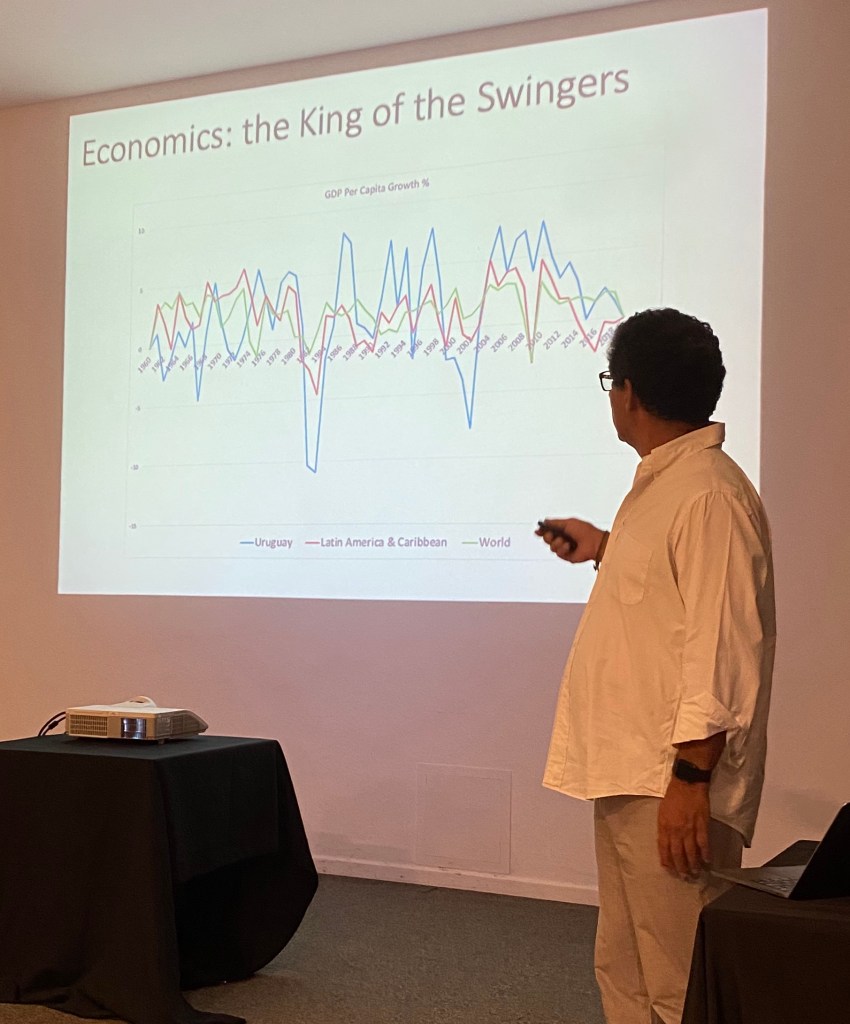
Gonzalo then went on to talk about the two major recessions in Uruguayan history. The first one he did not dive too deep into but in the 1980s Uruguay had an issue with its currency because it was pegged to the United States Dollar. The other major recession occurred in 2002 when it began with Brazil and Argentina’s decrease in value of there currency and citizens of those countries having substantial funds in Uruguayan banks. So when times become tough they all tried to withdraw their money at the same time which is known as a run on banks, or liquidity risk. The fallout of this was massive with Uruguay almost defaulting on their loans, but they cut the necessary costs and increased tariffs to not default. This is important in there recovery because if they did default they would have had to agree to austerity measures from the IMF to bail them out and also lose access to international credit. During this time period, poverty doubled from 15% to 30%. Also, they lost a lot of there people seeking work elsewhere with a 500,000 to 600,000 immigration outflow. Additionally, they had 3 out of there 17 banks at the time go bankrupt and their bonds downgraded to a junk rating.
Moving on, Gonzalo then went on to talk about some weakness Uruguay faces today:
- A slowing economy and growing unemployment (8.5% up 1% in 2019) due to this
- Lack of international markets
- A budget deficit of 5%, a risk to credit rating
- Traditional 12-year schooling has a graduation rate of 40%
- Cost of capital high for companies.
- A big deficit in government pension fund
On the other hand, some positives today for the Uruguayan economy are:
- Highest GDP per capita in Latin America
- Increasing financial formality laws
- Attractive retirement destination for foreigners and ease of becoming a permanent resident
- Currently hitting target inflation between 5-7.5%
- Montevideo able to run most days in summer on 100% renewable energy
Some things they are looking to improve on:
- Trading partners
- Infrastructure
- Education system
- Lack of innovation
Some current opportunities:
- Reworking trade deals
- New president beginning in March
- Potential free trade deal with the United States
While this is a lot to consume, as academics, we are not only learning new knowledge every day but learning from experience. The class really challenged Gonzalo by asking the hard questions and taking what we have already learned from a political and economic overview of Argentina and using that knowledge to compare and contrast the differences and similarities of these two Latin American countries.
Hasta la proxima,
Kevin Stafstrom
 SIE 2020, Latin America