Cemase Plant Visit

Cemase Blog

When we were told that Pepsi was unable to host us today and that we would be visiting a “waste management” company, many of us thought, no thanks I’ll pass. The majority of us came to an immediate conclusion that this visit would be muy sucio, or very dirty, for lack of better words. However, many of us realized that we would be experiencing more than just stench. Cemase is a company management company that was created in 1977 to help solve Argentina’s pollution problems due to high volumes of trash. They handle 22,000 tons of waste a day, which makes up 40% of all waste in Argentina. Cemase is partly owned by the government and partly owned by the city of Argentina. They have about 1,200 total employees, and they have disposed 48 million tons of trash. They are continuously innovating technology to come up with effective ways to dispose of waste properly. Their main goal is to educate all of Argentina about correctly disposing of waste by offering free tours and educational sessions. We began our tour by learning about the company and their three main methods of how they dispose of waste.
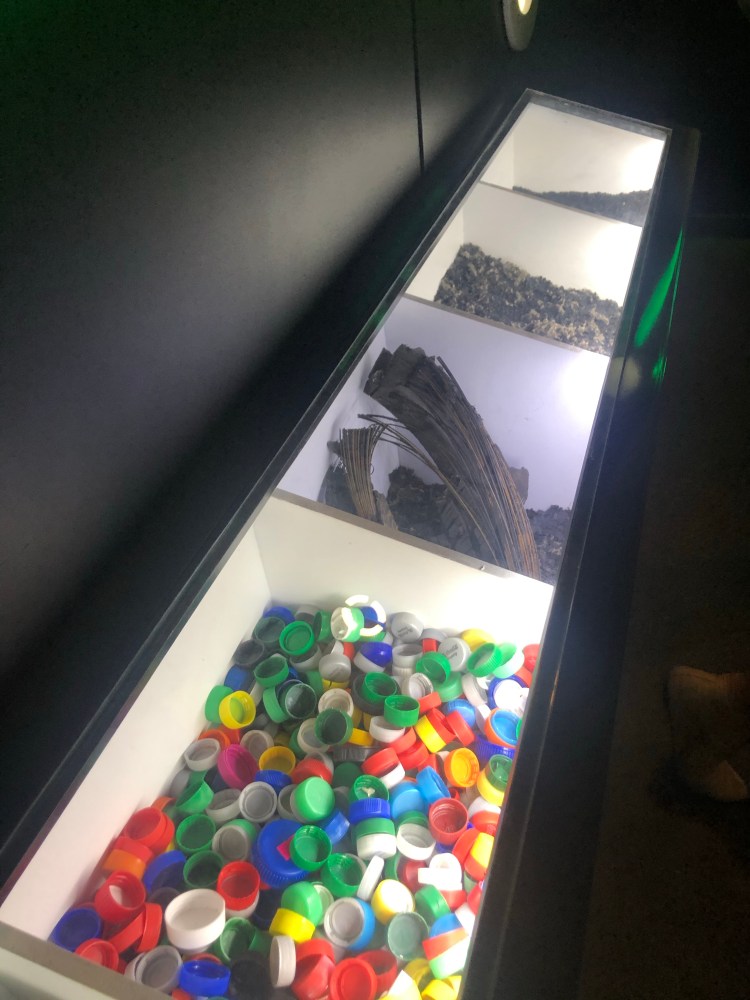
First, we learned about how they make tires into reusable materials. This plant is called, “Planta de reciclado RA nuematicos” and the process extracts the rubber from tires to be melted and produce other goods, such as paint. Next we learned about how the recycle plants, branches, and trees. This process is completed at their “Planta de recuperadora de residuos verdes,” which is where they take waste from branches and leaves and they make chipping from it. Once created, they donate the chilling to schools or other complexes that need it. Finally, we learned about how to treat the trash that is collected from dumpsters around the city of Buenos Aires. This process is done at the “Planta de tratamiento mecánico biológico,” and the main objective here is to separate recycled materials, waste materials, and organic materials from one another. The biggest challenge with this process is the contamination between recycled materials and non recyclable materials. For example when a banana peel contaminated card board then it is hard to recycle the cardboard.
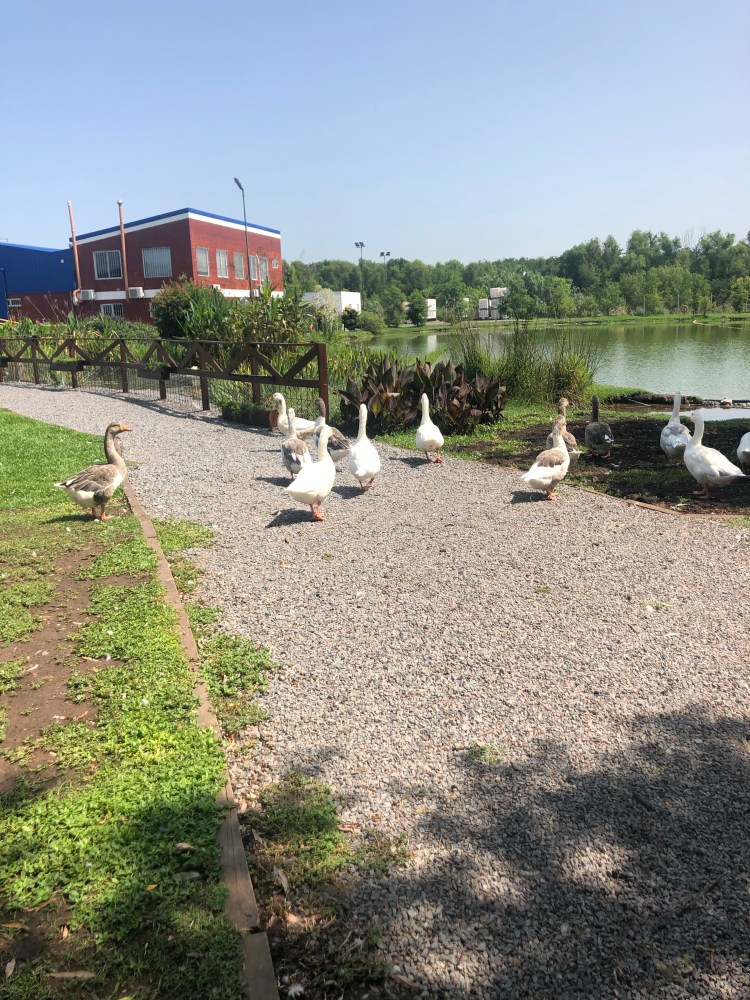
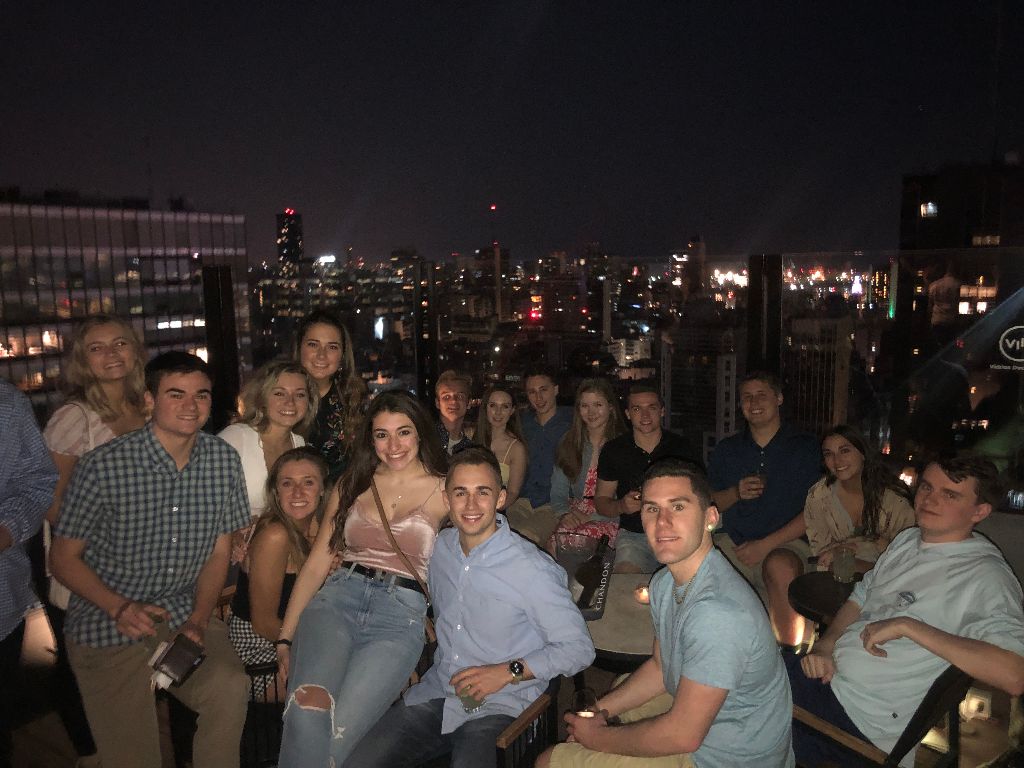
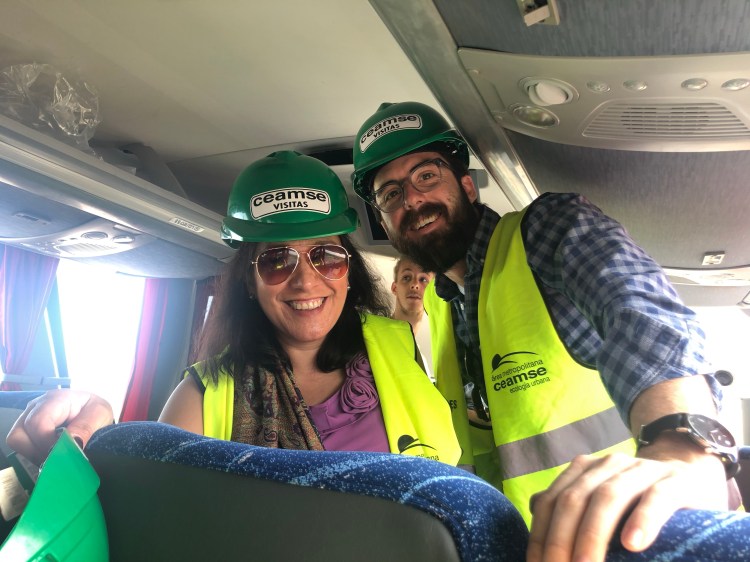
After being educated about how the company operates, we were given bright yellow vests and green helmets. This surprisingly made many of us happy and we took fun pictures together. Then we began the tour. The company aims to put the decomposed waste back into the ecosystem, resulting in many different animals living on the site. There are cows, donkeys, birds, and even peacocks on site. The fields are beautiful and not smelly. It was during this time when we all realized that the plant was doing a lot to benefit the environment. For our generation, sustainability is very important to us. Many people appreciated the beauty of what the company aims to do and looked past a few interesting scents.
Goodbye… Buenos Aires

Goodbye… Buenos Aires

How do you summarize nine days in Argentina’s capital let alone all the time spent in eight business meetings, traveling to different cities, meeting new people and trying new things? 

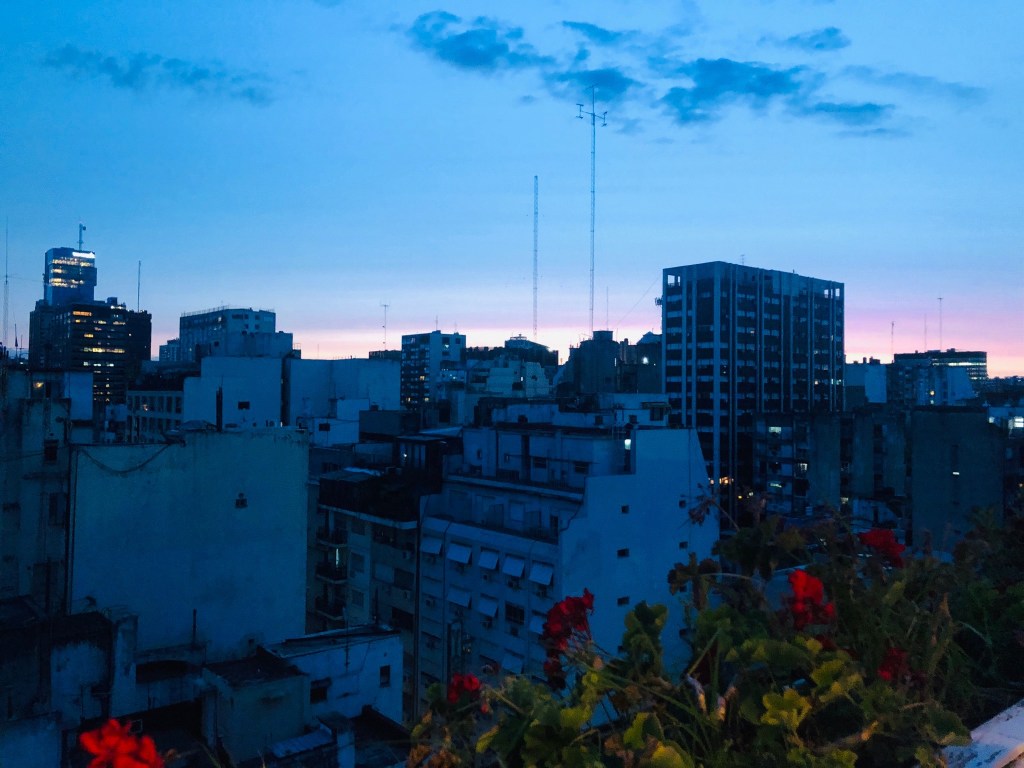
It seems surreal knowing that we will be saying goodbye to this picturesque city. A city full of tourists, artists, writers, cultures, and indescribable architectures. The hours we spent walking on the cobble stone streets of Buenos Aires were filled sharing laughs and stories with Bryant students and professors that may not have known each other prior to this trip. We were unaware that we were making memories that will be recalled for years and new friendships that will last a life time. The late nights spent on hotel rooftops with incredible views of the Obleisco monument and the skyline of the buildings outlined by a plum sunset sky will be engraved into our minds every time the sun sets back at home.

Coming to Buenos Aires the majority of us did not know much of the Spanish language. We studied common phrases and words in our Sophomore International Experience class that truly paid off, especially when we were ordering at a restaurant, excusing ourselves when walking around Argentinians, or telling waiters and retail workers where we were from. The language barrier became smaller and smaller each and every day. The concept of adapting to new environments was studied in our Global Foundations of Business and Global Anthropology courses, where we learned that any environment, no matter how diverse the culture is, will never adapt to you. We were forced to submerge ourselves in the bold culture of South America. We began understanding this adaptation by researching the cultural, political, economical, and architectural aspects of Buenos Aires prior to this trip; however, a Google search does not quite compare to placing yourself in the city where you become one of six million. 

This new experience forced us to try new things including a new way of life. Such as watching the sunrise at five in the morning, eating dinner at eight o’clock at night, napping for an hour or so in the afternoon, and of course expanding our palettes of food. The restaurants in the city are home to a diverse amount of tastes including homemade dulce de leche pastries, Argentinian cuts of meat, yerba mate, bold wines, and literally every part of an animal.

We leave Buenos knowledgeable about various businesses that operate in the city. We departed each meeting with amazing tips and advise to further our education back at Bryant. This city gave us a true global perspective of business. So open your phone and Google Bryant University and you may come across these words:

“Bryant is a private New England university with a tradition of innovation and a global vision for success. Our academic programs are distinguished by an integration of business and the arts and sciences with a global perspective”.

There is no better example of how Bryant prepares it’s students for success in global business than allowing them to travel the world in just their second year of college.

We were accompanied by three professors who each have impressive knowledge in diverse areas of study. Professor Eileen Kwesiga specializes in organizational behavior and human resource management, Professor Ryan Marnane comes from English and cultural studies, while Professor Patricia Gómez is a senior lecturer in modern language. All three professors have pushed the idea of global business throughout the trip and how creating a network outside the United States is imperative to a future in the workplace. Us students saw each of their different professional backgrounds shine throughout our trip because they each provided different outlooks on every business meeting. We utilized their knowledge by reflecting on our own academic ambitions. How would each meeting benefit our individual majors and personal interests?

Buenos Aires, you have made living out of a suitcase for two weeks a pleasure. We will miss the beating hot sun on our skin, the busy streets filled of tourists, the taxis that fly by, the stray dogs that roam, and the walk from Avenida Leandro N. Alem and Paraguay back to our hotel.  A special thanks to our program coordinator, Sofia Guardone, who spent two weeks with us and showed us the most beautiful places. We thank Sofia and our professors for being incredibly patient, flexible, and kind!

Bryant University, you are not ready for the return of these thirty-three bulldogs. 

Go Books Go Bulldogs,

    ⁃    Olivia Pohorylo

Arrival, Bryant University

After a long weekend of traveling, we have finally touched down at Logan Airport. This moment is most definitely bitter-sweet for all of the students, as well as the professors. I am sure I can speak on behalf of everyone by saying this trip has been a whirlwind. It has been a once in a lifetime educational experience in which we had the opportunity to speak to business people and not only learn more about business in their country, but also practice our networking skills. Being from the United States, we assume everything operates in the same manner as our own businesses. However, every country has different cultures and norms that shape and mold how they do business. It has been very eye opening and perspective changing for us as students to be able to experience this change in culture first hand and expand our knowledge in the realm of international business.

I am a Business Administration major with an undecided concentration. This trip has helped me to get an inside look at different types of careers and also discover interests that I didn’t even know existed. For example, I have never been someone who was interested in computer science or technology; or so I thought. However, after visiting Codigo Del Sur in Uruguay, I suddenly have found an interest in being apart of a company that develops mobile apps and websites. Who would’ve thought? However, I wasn’t the only student discovering new interests on this trip. Nyla Simon discovered her new interest of working for the software development company, Globant. After the presentation and site visit, she realized that the work environment was one she could see herself being apart of and the company’s mission was one that resided strongly with her. I am certain that other students were able to make personal discoveries towards the development of their careers as well.

Beyond discovering more about ourselves and our futures on this trip, we were also able to dive head first into an unfamiliar culture and gain insight about the world we live in. We experienced the food, dance, language and religion in both Argentina and Uruguay and really got to put our communication skills to the test. I learned so much about the Spanish language and cannot wait to take my knowledge with me in the future for more networking opportunities.

Everyone is exhausted as we drive on the bus back to Bryant University. Some students met their parents at the airport and already said their goodbyes. The rest of us are dreading that moment. We began this trip as a group of strangers and left as family. I can honestly say that I have made friendships I know will last a lifetime. This trip taught me how to network with my peers and create strong relationships which can ultimately help my business skills in the future. It is so important for all of us to not only take away the important educational aspects of the trip, but the social ones as well. Being a good business person entails great communication skills and this Sophomore International Experience succeeded in providing us with exactly that.

On behalf of the 33 students that traveled to Latin America, I would like to thank our three amazing professors for making this trip possible and unforgettable. I would also like to thank Bryant University for providing us with this opportunity. And last but not least, thank you to our parents for supporting us on this educational adventure. It is because of you that we are coming back to Bryant with a boatload of new knowledge, as well as stories and memories that we will tell and remember for the rest of our lives. 

Signing off for the Latin America Sophomore International Experience Class of 2020…

-Lauren Medeiros

Dallas to Boston

Nine hours later, we just landed at the Dallas Fort Worth Airport! It’s 5:15 am and we finally have entered the airport. The first thing everyone noticed was the significant drop in temperature. Immediately after entering the airport we are required to go to customs. We used kiosks to answer questions regarding our trip. Specifically what we did there as well as what we are bringing back with us. 

Once we all successfully made it through immigration, we went to baggage claim and to recheck our bags for our final flight. It’s evident how different security is going into the United States versus security in other countries. The United States makes security the number one priority in the airport rather than the efficiency we have experienced leaving the country and in Argentina, Uruguay, and Chile. Surprisingly we found it way more efficient in the United States to get through security because of how organized they are. It’s clear how effectiveness and efficiency matter more when they are combined. It also brought a sense of comfort that our country has continued its strict security. 

After spending the last two weeks learning about international business and being back in the airport, it brings another challenge of this type of business to light. If your business requires you to leave the country on multiple occasions within a single month, it creates a burden on that person as well as taking up a significant amount of their time to go back and forth. Businesses might make the decision to limit their international business or find a country with only a few hours of time change in order to e-communicate. This would allow for less international travel but the ability to get work done within the normal hours of a work day. 

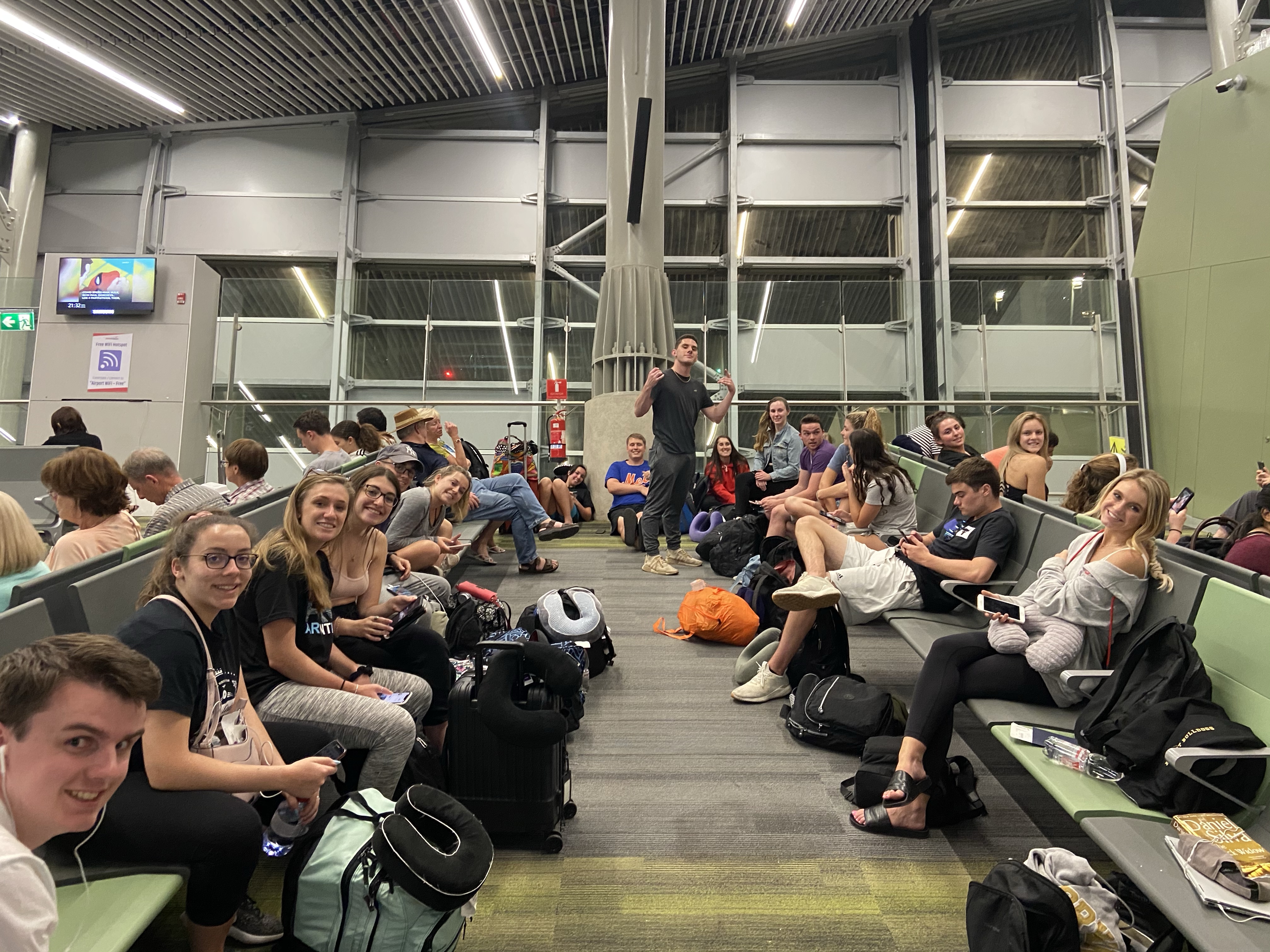
An hour after arriving at the airport everyone was exhausted. It felt like this was our first significant amount of down time since the beginning of the trip. The past two weeks have been a non-stop, fast pace. As people walk past our group, they turn and laugh at the amount of us passed out on the airport floor. Some even have asked what we’ve done and why everyone is so tired. They are so impressed by how much we have learned and seen in the past two weeks. 

After sitting around for a few more hours, we finally boarded the plane. We can’t wait to be back in Boston in a few short hours!

Nyla Simon

Hello Santiago!

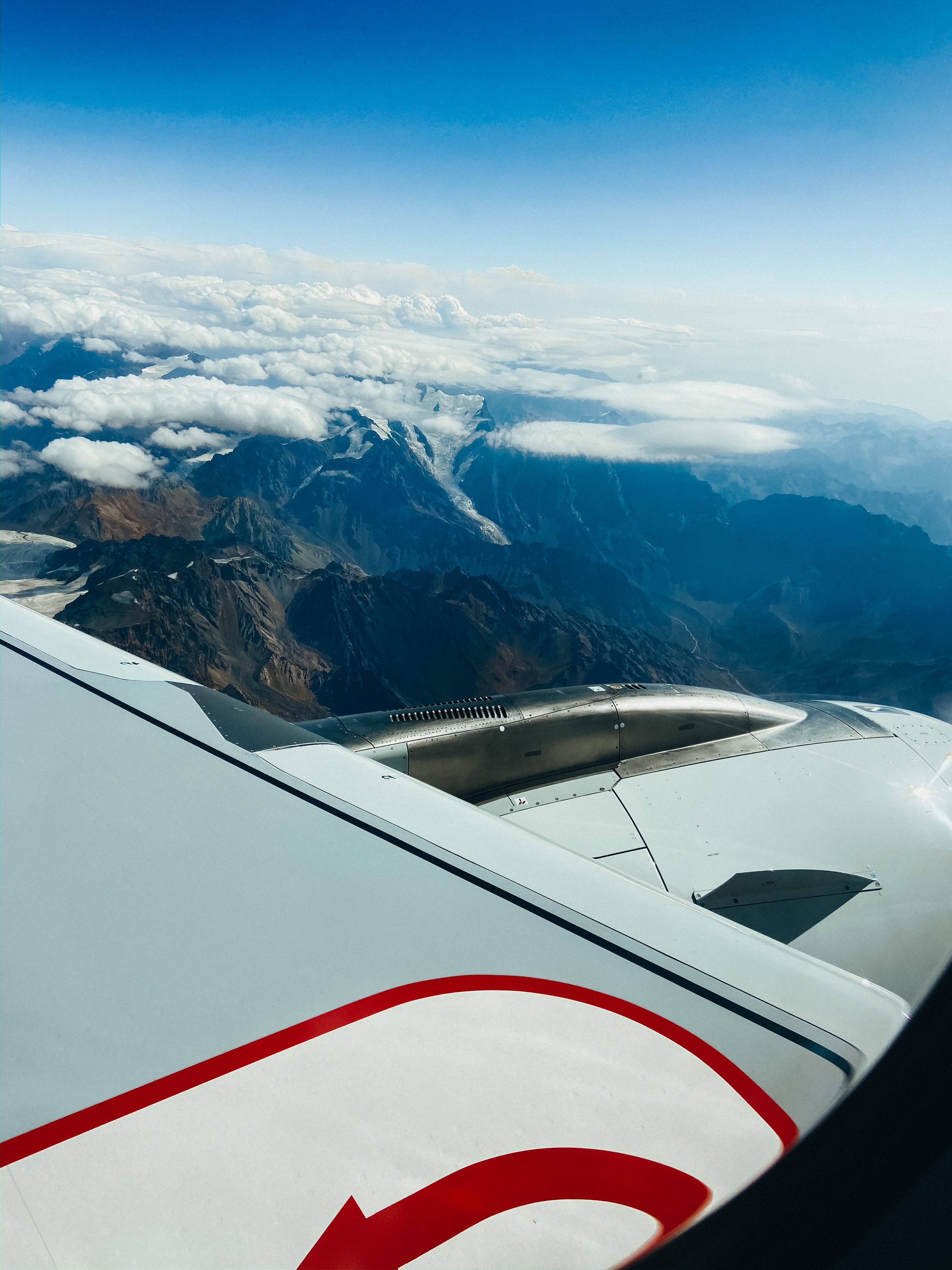
The Andes Mountains are one of the world’s largest mountain ranges. As we were flying from Buenos Aires to Santiago, we flew above the Andes mountains and saw such a beautiful sight.

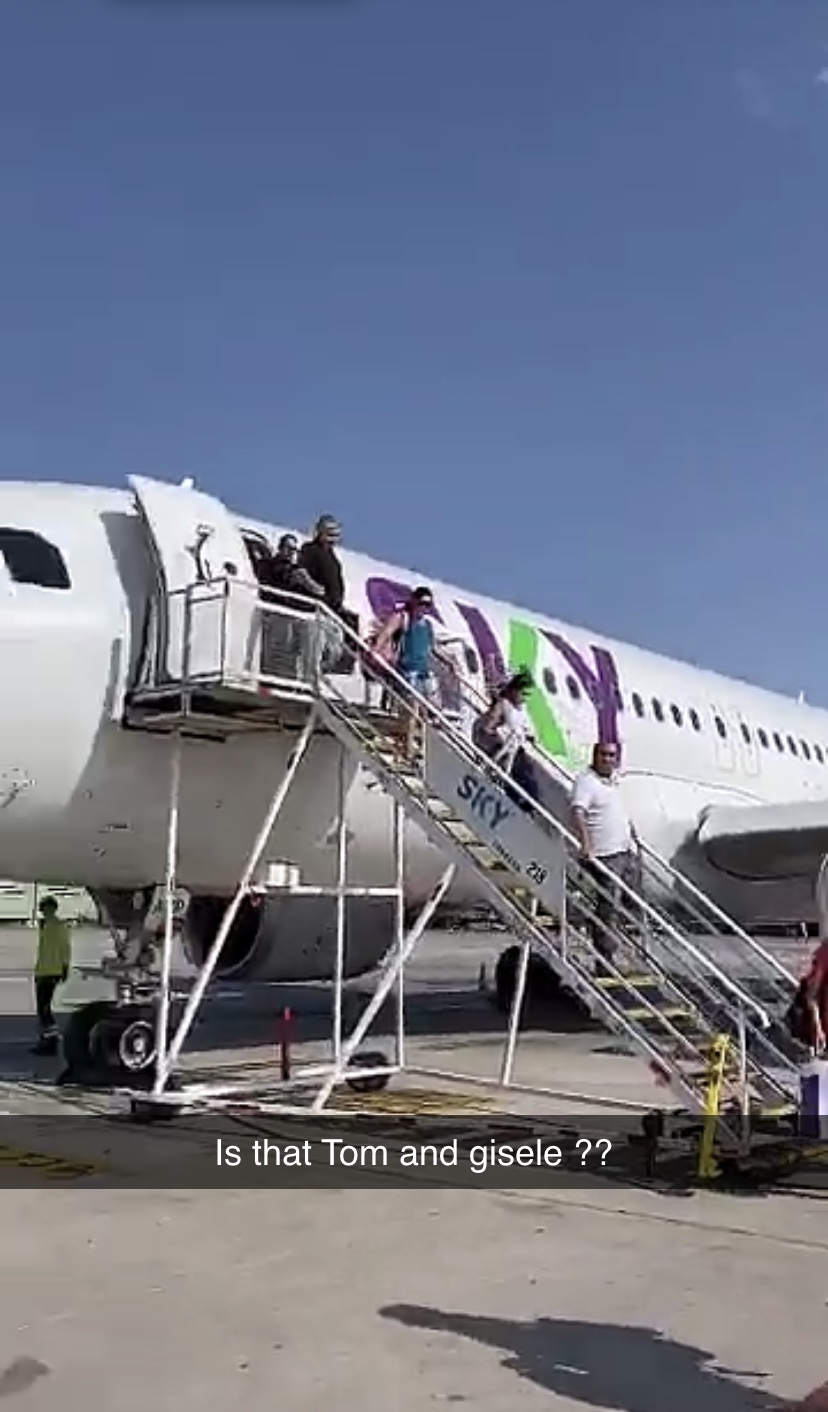
Around 5:30 p.m. we touched the ground of Santiago, Chile and proceeded to the inside of the airport for our first layover of our journey back to Boston. We stepped off the airplane to stairs that led us outside, instead of a tunnel to the inside of the airport like we are used to. Some students said they felt like they were celebrities stepping off their private plane and were taking pictures of each other pretending to be paparazzi.

After we all gathered in the airport, we conducted our first roll call in Chile and then proceeded to customs. Many of the students have not travelled internationally and did not realize the amount of security precautions that must be taken to exit and enter a country. As students studying international business, it is important to realize all that goes into traveling to different countries. In order to get to our connecting flight and relax at the gate before we take off for Dallas, we had to go through customs 2 separate times. We had to exit the Chile Airport in order to grab our checked bags and then proceed to print our new boarding passes and check our bags for a second time. After checking our bags, we had to go through customs for the second time and go through security in order to enter the Chile airport. This process took about 2 and a half hours. By this time, it was around 8:00 p.m. and we had about 1 hour before we started to board the plane.

In order to move from one flight to the next, we had to go through customs 2 different times. This process took a lot longer than we anticipated and gave us a perspective on what it is like to conduct business internationally. This experience was very eye opening for many students because it gave us a first-hand experience as to what our life could be like if we decide to conduct business internationally. This process takes a lot of time out of a person’s day and is an important factor in deciding whether to travel internationally for business.

Now we’re ready for our flight to Dallas!

The Santa Susana Ranch

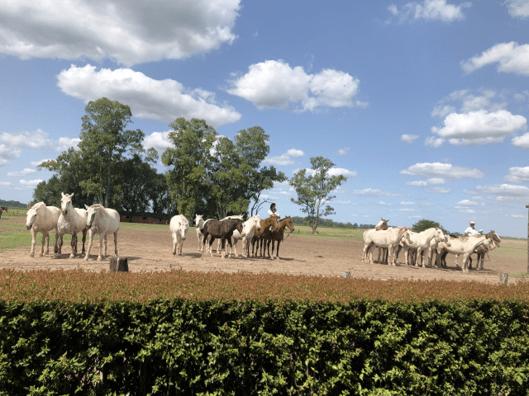
Hola! Today was our last full day in Argentina and we spent the majority of it at the beautiful Santa Susana Ranch. This ranch is located in the district of Campana, Buenos Aires province and has been owned by the same family for over 100 years. Mr. Francisco Kelly named the 2965 acres of land after his wife, Susana Coffrey. The land was mainly used for agricultural purposes, but in the last 25 years it has also become a tourism resort for people all around the world.


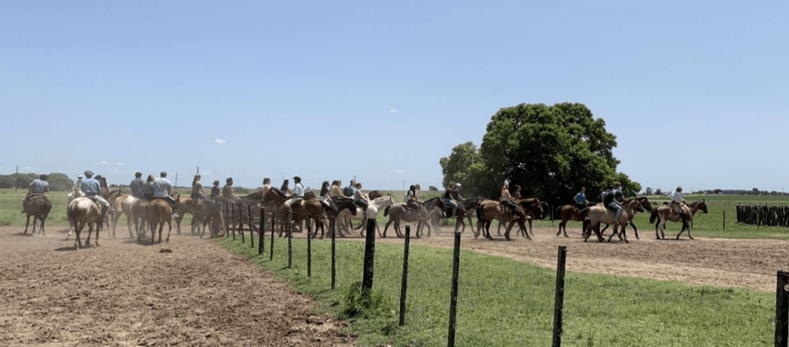
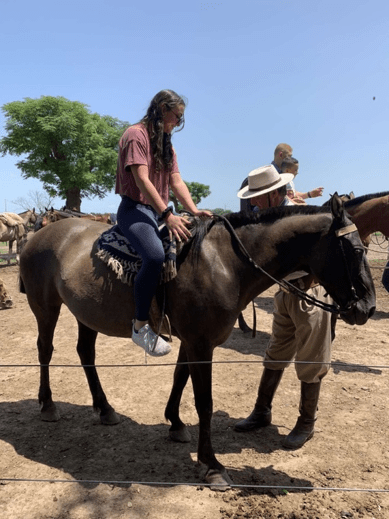
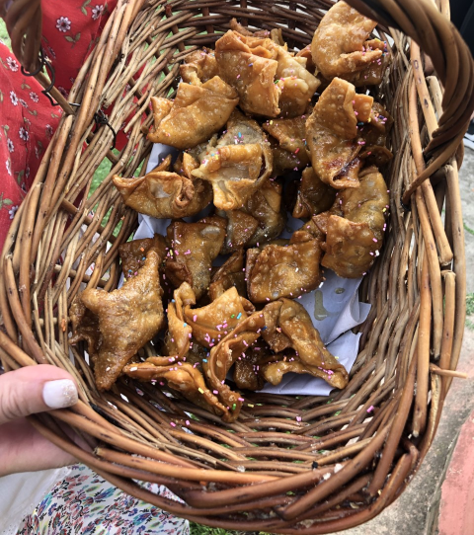
When we first arrived at the ranch we were greeted with a glass of wine and homemade empanadas. The “gauchos” or as we call them in the US, “cowboys”, then took us to see the horses. There was the option to either ride a horse individually or take a horse drawn carriage ride but almost everyone chose to ride a horse on their own. For some, this was their first time riding a horse, which only adds to the growing list of new things we were all able to experience while on this trip. The land was beautiful and the horses, while a bit intimidating, were overall gentle and kind.


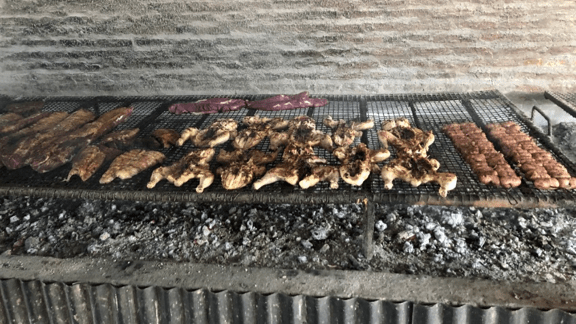
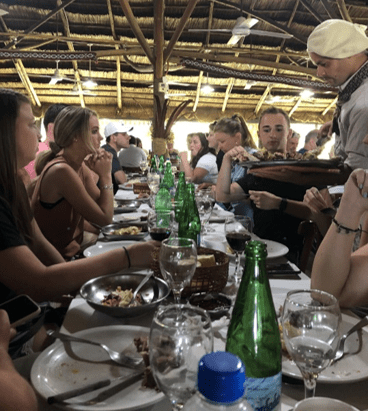
After horseback riding, we went inside for a traditional Argentinean meal called an Asado. It contained a vast variety of grilled meats with side dishes of different vegetables. A typical asado may also contain other items like grilled cheeses and grilled vegetables. The variety of food is cooked over a parrilla which is lit by pinecones and wood. The point of using this type of material is to cook the food over hot embers rather than on top of a flame. The meal ended with flan, which is a typical desert served in Argentina.

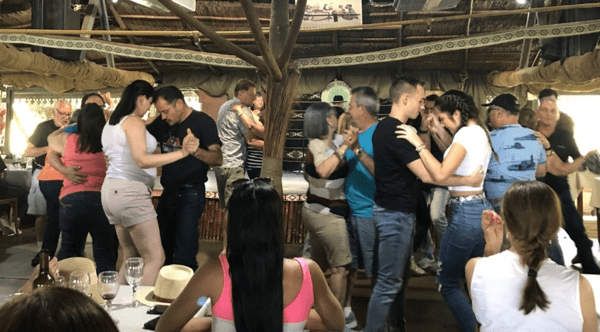
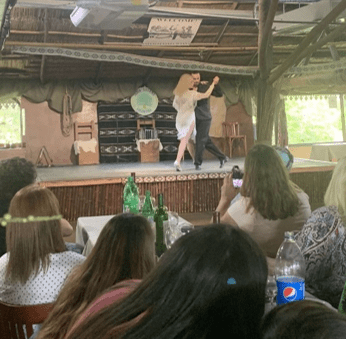
There was a show for us to watch after lunch that was conveniently located in the same hall lunch was served in. It started with a tango dance, which was cool to see after we had just taken lessons the day before. Then live music started, two men playing a guitar and an accordion. The accordion wasn’t a typical instrument used in Argentinean tango music however is regained popularity in the early 21st century after Chango Spasiuk, an Argentine artist, brought it international attention. Quickly after the music started, couples got up to dance. Soon everyone began to show off their new tango skills on the dance floor. After a while of dancing, the next act came on, two Argentinean malambo dancers. The malambo is a traditional folkloric dance that was born in Argentina in the early 1600s. They use a lot of tap steps and leg flicks similar to the tango, to create this historic dance. The last act of the show was a boleadoras dance. A boleadora is a primitive hunting tool used by native south Americans. It is a projectile weapon made of a chord with weights attached to either end. The boleadora dance uses the boleadora both as a percussion instrument and a juggling tool. It is most popular is circus acts, but it was very cool to see it performed at the ranch.

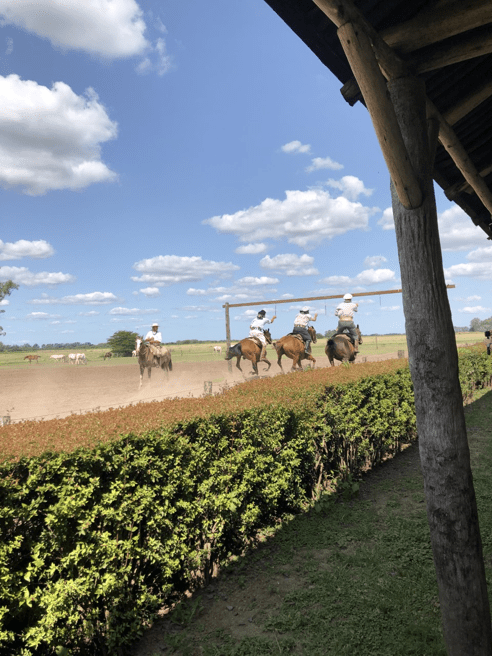
Next up was the horse show. We gathered outside as the gauchos rounded up the horses with the help of a trusty dog. We were then able to see them perform the corrida de sortija which is a traditional gaucho sport. The objective of this sport is for the gauchos to get a small ring on a stick about 10 feet off the ground, while riding a horse. It is much harder than it seems, however it was thoroughly entertaining. If the gauchos were successful, they would present the ring to someone in the crowd. A few lucky Bryant students were presented with a ring for the small price of giving the gaucho a kiss on the cheek.

The trip ended with a quick serving of yerba mate, a popular tea shared among friends at all hours of the day, and another homemade desert. This one was a sweet pastry filled with strawberry jam, pictured above. The ranch visit was a great way to end this trip because we were all able to spend time together creating new memories before heading home.

Check in soon for more updates to come!

-Gabby Giordano

Tango show

Buenos Diaz!

After a fun evening of learning to dance the tango and a delicious meal it was finally time to see a tango show! We went back to the theater where we had our lessons and it was finally time to watch the professionals work their magic across the stage.

The stage for the nights show!

The show started with a brief video on the history of the tango in Argentina. From the video we learned about the birth place of the tango and of the many famous performers that had performed in the theater since 1961 when the theater opened up. The Argentinian tango is a result of multiple the cultures that lived alongside the native Argentinians. In the late 1800s the tango had become the traditional dance during conventillos parties, parties that took place in large houses where several families lived. They were traditionally accompanied by a solo guitar or a small band that would include a violins, flute, a double bass, and a tango accordion.

One of the bands from the show

The tango is a dance that is comprised of different movements and intense eye contact to tell a story. Communication is the exchange of direct or indirect information which can be sent or received. In the tango one partner receives an indirect message that is being sent from the leading partner. These messages are sent through the different movements and intense eye contact that is made throughout the dance.

The performers getting ready to start telling their story

All in all the night was a success. We not only got to learn the history of the Argentinian tango but we also got to see a magnificent performance and even learned a few steps!

That’s all for me today, adios!

Tango Lesson

Hola desde la ciudad del tango…  

Buenos Aires, Argentina!

Tango is an important part of the Argentinian culture. The tango is a romantic partnered dance that was born in Buenos Aires, Argentina. It was migrated from European immigrants who arrived to Argentina in the 1880s. Since then tango has been very famous for the people near River de Plata, also known as the plateros.

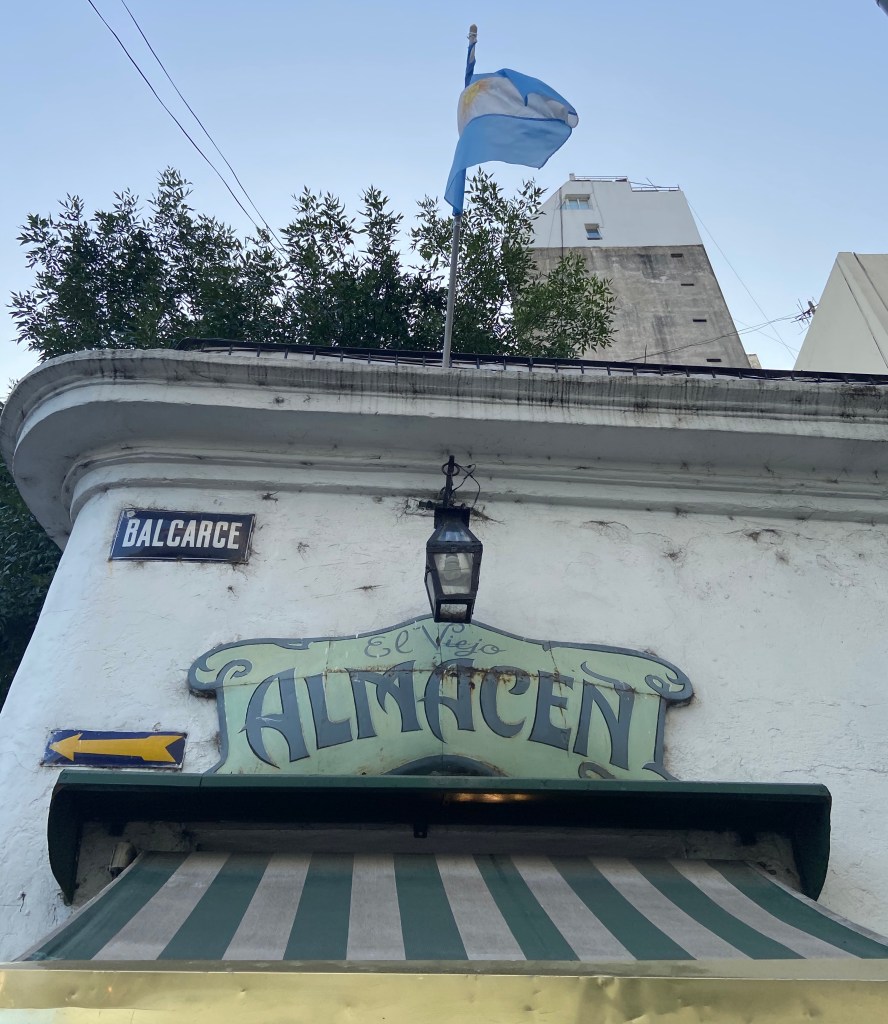
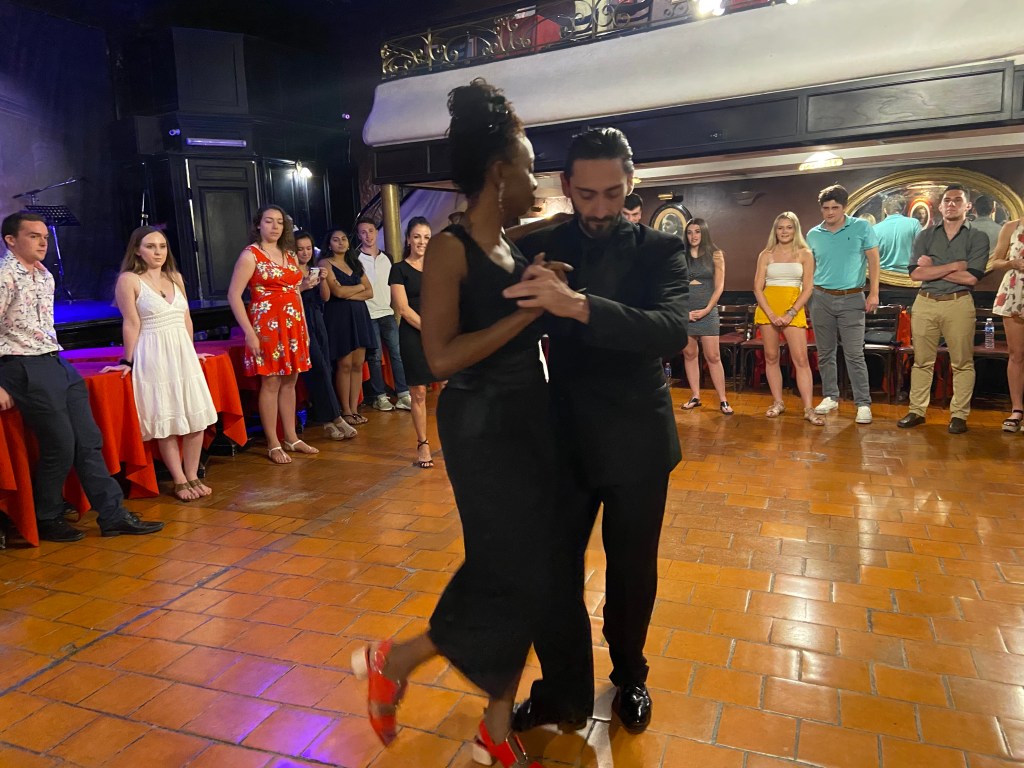
Today we had the opportunity to have a tango lesson. We walked into a building in the corner on Avenida Independencia 299, the place was called El Viejo Almacén. El Viejo Almacén was founded in 1969, meaning their 50th anniversary was last year in 2019. Knowing this made me think that we were at a professional tango place. We were immediately welcomed with drinks with the options of coke, sprite, and water. Then our dance instructors Juan and Natalia came out to introduce themselves. Most of us have never danced tango before. We began the lesson by just walking around in a circle with a regular casual walk. Then learned the basic steps of tango and how the beat of the music is the most important part. We also learned how the man always leads and the woman follows during the dance. With this we can see the machismo in the culture. After we finished walking around we had to pair up and begin to do the basic tango steps. It was a little difficult at first but after reviewing it various time it just got easier. At the end of the lesson the students and professors were given certificates of completion. This made us feel like we were already tango dancing pros.   

I thought the tango lesson would be more difficult. It ended up being easier than I expected. It was so much fun to learn the tango in the city it was born in. Tango lessons can relate back to business by the money the instructors can charge for each lesson. There’s many people who like to try new dances and are willing to pay to learn. I’m glad I had the opportunity to learn a new dance and actually experience something of the Argentinian culture.

Adiós!

Wandy Montilla

Globant Presentation

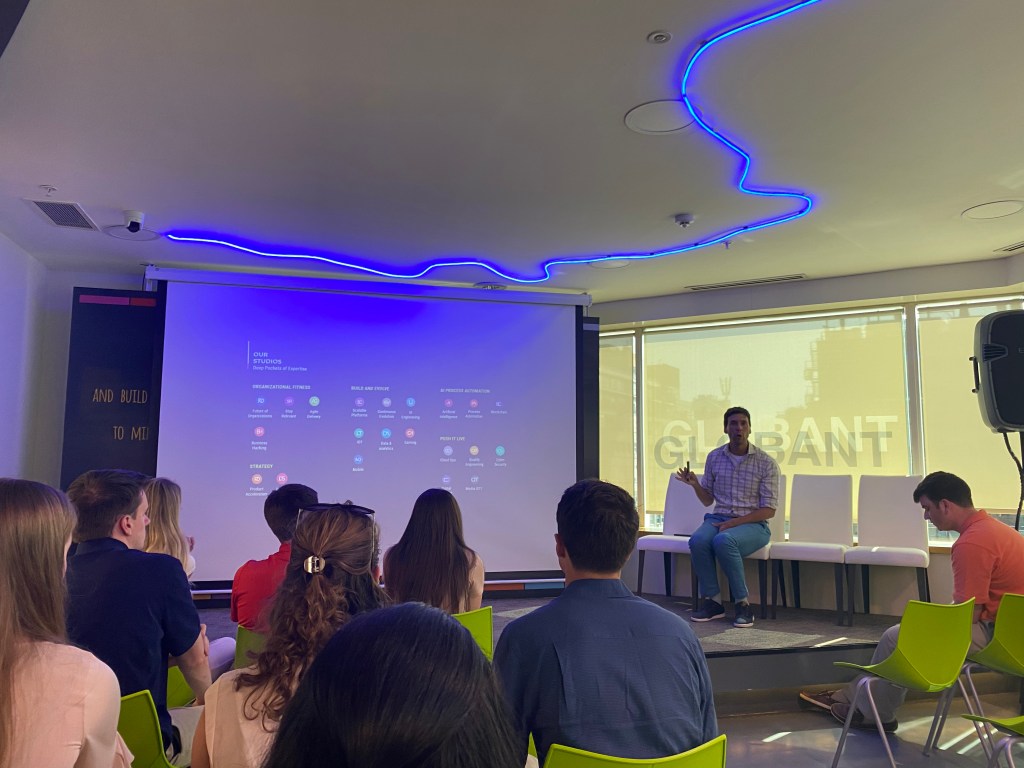
Bryant students were excited and grateful that employees from Globant spent their afternoon with us yesterday. Our presenter was Mariano Martins, the VP of Delivery for Globant’s office in Buenos Aires. Globant is a mobile and web software development company. They have 39 offices located in 14 countries across the world, including but not limited to: Argentina, India, and the United States.  They work interdependently with each office to provide the most efficient and effective products for their clients. They do this by allocating work to different regions depending on the project to foster the best results and an inclusive company environment. 

Globant has major clients in a variety of industries to create interactive and sustainable programs for users and employees. A new and popular project that recently came to fruition is Disney Plus. Globant was a key component in the creation of the Disney’s new outlet for TV entertainment. In fact, our presenter himself, Mariano worked on the case directly for four years.  In describing this project, Mariano stressed that their goal and vantage point when embarking on a new project is not to change the product itself, but to change the way the customer interacts with it. Hearing this description, I was able to make the connection to Bryant’s IDEA program. The program is a weekend long project completely centered on Design Thinking. Viewing a situation from the consumers point of view allows people to develop solutions that cater directly to the needs of said consumer. The exact program students at Bryant complete is transferred into the real world by the example of Globant’s ideology. 

Subsequently to sharing some of their accomplishments as a company, Mariano then proceeded to break down internal or behind the scenes actions of how exactly a project is carried out and organized. Personally, I really appreciated this addition in the presentation. As the majority of students on this experience have yet to intern due to our sophomore stature, we are thirsty to learn the day to day and organizational activities of company’s rather than simply an overview of their mission and accomplishments. We learned that while planning projects, they break down the all the different roles that will need to be included. Then, they break down the project life cycle to see how long/when each role is required in the duration of the project. It is this process that allows managers to delegate responsibilities to their employees accordingly for each project. This allowed me to relate these concepts to the Management 200 class everyone has or will taken, where we needed to organize a project of our own. This knowledge from the employees of Globant, granted the Bryant students the opportunity to compare our strategies with a success company’s. 

Lastly, an employee from their Communications department, Eileen Horcada, spoke to us about the company culture as well as bringing us on an office tour to see this culture in action. Globant prioritizes a fun, inclusive, hardworking yet stress-free environment. They believe if employees are motivated and relaxed when coming to work, they will be highly productive throughout their work day. Each employee has objectives they are required to meet, and as long as those are completed, free time and breaks are allowed to be taken at the discretion of the employee. This was emphasized on the office tour when we saw a ball pit that meetings can be held in, a music room, and a “chill room” that includes video games, food, ping pong tables, etc.  Additionally, the offices themselves are structured with purpose. There are no walls between employee desks in an effort to foster the inclusive, collaborative environment. 

In conclusion, this business visit allowed for the Bryant students to get an organic look into Globant. They shared information about the company that specially tied to the concepts, we, as sophomore students are most curious about. It is for this reason that this was the first business visit where a student asked “Are you hiring?” Every one of us were inspired and excited to hopefully one day be a part of a company like Globant, or maybe even Globant themselves. 

Expedia Group

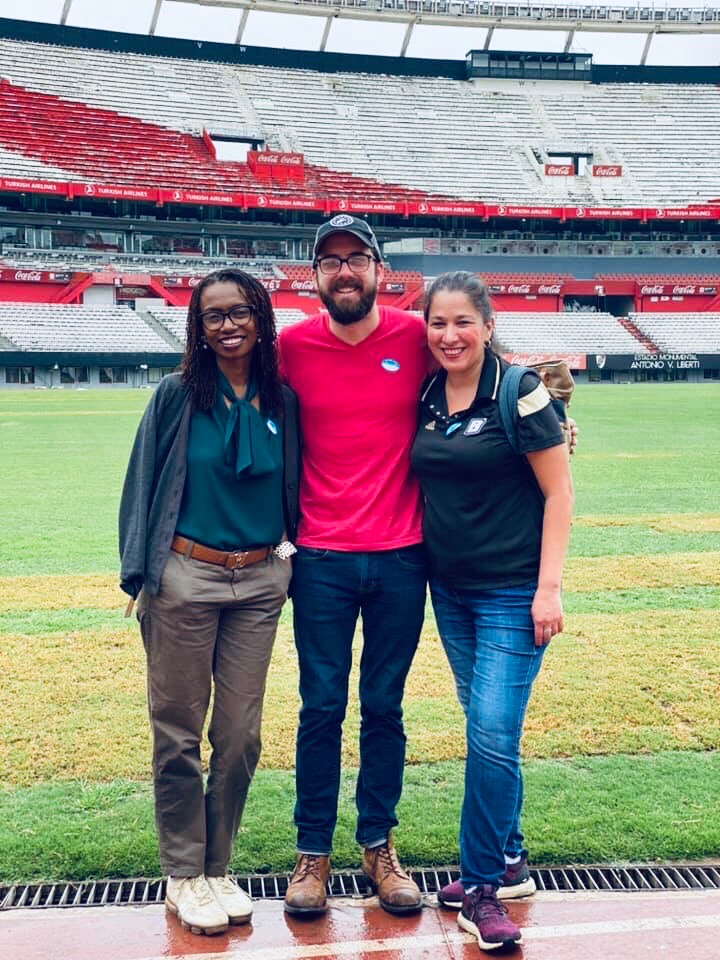
After our grand tour of the River Plate stadium, we returned to our hotel and eventually attended our meeting of Expedia group in the financial district of Buenos Aires. We were welcomed greatly by Expedia and our guide, Nicholas Grande, who is an area manager within Expedia.

Image

Nick explains that the worlds travel platform is about bringing people together and bringing the world within reach. They attract diverse travelers through their various channels and platforms, alongside generating global demand and maximizing potential revenue.

Image

In comparison in competition of external forces from the hotel market, like AirBnB, Nick believes that their rival is nowhere near them and are far from controlling the hotel market. If Expedia finds an opportunity, then they would be glad to work with companies in that field. Their most successful marketing technique has targeting the U.S. part of their market and have identified 10 key trends in U.S. consumers in order to cater to their needs. For example, they are likely to present adventure trips to the female demographic in their market, as adventure travel is currently trending among women. However, the most important factor for every consumer base for booking a hotel is the value for their money. The biggest challenge they face are the data giants that overshadow them, such as Google. Other problems include keeping their companies from overshadowing one another and not possessing a website about travel experiences.

During the informative meeting, Nick had us engaged with a quiz on Kahoot that had questions based on the presentations. These questions were on statistical analyses about various groups of customers, like how many customers read reviews prior to booking a hotel (83 percent).

Image

What had my undivided attention was the data aspect of the company. As an information systems major, data science can play a big role in my career. Information needs to be streamlined and accessed more and more easily as push further into the digital age. Business intelligence influences the people on what they want in their experiences of the hotel itself (business and leisure).

That’s it for this one! Stick around for more to come!

Harrison Burke

Design a site like this with WordPress.com
Get started